Search Engine Optimization (SEO) is the process of improving a website’s visibility in organic search results. It helps businesses, bloggers and website owners attract relevant visitors from search engines such as Google without paying for every click.
Understanding what SEO is and how it works is important for anyone looking to build a strong online presence. Whether you run a small business, manage an e-commerce store or publish blogs, SEO can help people discover your website when they search for relevant products, services or information.
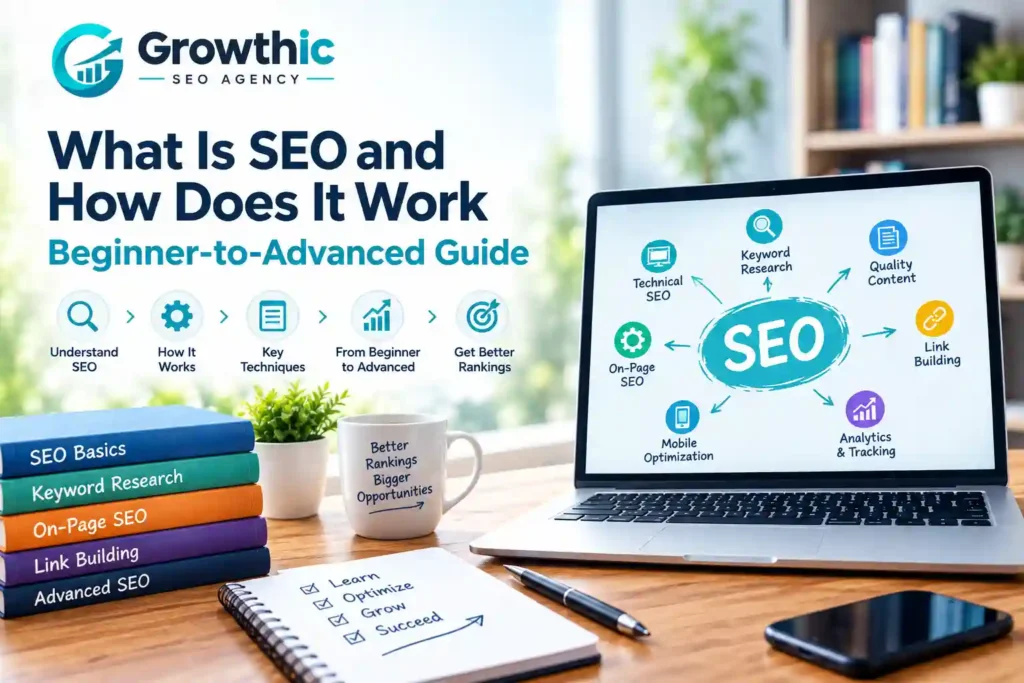
Modern SEO involves much more than keywords. It includes helpful content, website structure, technical performance, backlinks and user experience. Let’s explore how SEO works and how you can apply it to your website in 2026.
1. How Does SEO Work?
Search engines use three main processes to discover and display web pages: crawling, indexing and ranking.
Crawling: Discovering Website Pages
Crawling is the process through which search engines discover web pages using automated programs called crawlers. Googlebot, for example, follows links and uses sitemaps to find new and updated pages.
You can make your website easier to crawl by maintaining a clear internal linking structure, creating an XML sitemap and fixing broken links. However, crawling does not guarantee that a page will be indexed.
Indexing: Understanding and Storing Content
After discovering a page, Google may analyze its text, images, links and other information before deciding whether to add it to its index.
Pages that are blocked, duplicated or provide little useful information may not be indexed. You can use Google Search Console to check indexing status and identify potential problems.
Ranking: Displaying Relevant Results
When someone searches on Google, its systems select and order relevant results using numerous signals. These include the relevance and usefulness of content, the search context, page experience and other factors.
SEO helps make your website understandable, accessible and relevant to the searches you want to reach. However, no SEO technique can guarantee a particular ranking.
2. The Four Main Types of SEO
A complete SEO strategy usually includes four important areas.
On-Page SEO
On-page SEO focuses on optimizing individual website pages to make their content clear and useful.
Important elements include:
- Relevant keywords in titles, headings and content.
- Unique meta titles and descriptions.
- Descriptive URLs.
- Optimized images and meaningful alt text.
- Relevant internal links.
- Clear headings and readable content.
For example, a page about SEO services should explain the services offered, their benefits and how potential customers can get started.
Off-Page SEO
Off-page SEO involves activities outside your website that can help build its reputation and visibility.
Backlinks from relevant, trustworthy websites are an important part of off-page SEO. You can earn them by publishing useful resources, contributing expert articles and building relationships with relevant websites.
Focus on earning genuine, relevant links rather than collecting large numbers of low-quality backlinks.
Technical SEO
Technical SEO improves the accessibility, structure and performance of your website.
Key areas include:
- Website speed and Core Web Vitals.
- Mobile-friendly design.
- HTTPS security.
- XML sitemaps.
- Crawlability and indexability.
- Proper redirects and canonical URLs.
- Structured data where relevant.
A technically sound website makes it easier for search engines to access your content and for visitors to use your website.
Local SEO
Local SEO helps businesses improve their visibility in location-based searches, such as searches for services near a particular city or neighbourhood.
Small businesses can improve local visibility by optimizing their Google Business Profile, maintaining accurate contact details, collecting genuine customer reviews and creating useful location-specific pages.
For example, a business targeting SEO services in Nashik can create a relevant service page and maintain an accurate local business profile.
3. How SEO Helps Small Businesses
SEO can help small businesses reach potential customers who are actively searching for their products or services.
Some important benefits include:
- Organic visibility: Reach people searching for relevant products, services and information.
- Targeted traffic: Attract visitors whose search queries match your offerings.
- Long-term value: Well-maintained pages can continue attracting organic visitors over time.
- Brand awareness: Appear in relevant searches and introduce your business to new audiences.
- Lead generation: Help potential customers discover your services and contact your business.
SEO does not replace every other marketing channel. Combining SEO with other suitable marketing activities can help businesses reach customers at different stages of their buying journey.
4. Important SEO Factors to Focus on in 2026
SEO continues to evolve, but several fundamental practices remain important.
Helpful and original content: Publish accurate, informative content that addresses the needs of your intended audience. Avoid creating pages solely to target keywords.
Search intent: Understand whether people want information, a particular website, a product or a service. Create pages that match the purpose of their searches.
Mobile experience: Ensure your website is responsive, easy to navigate and usable on smartphones.
Page experience: Pay attention to loading performance, visual stability and responsiveness. Core Web Vitals can help you identify areas for improvement.
Trust and credibility: Provide accurate information, identify authors where appropriate and demonstrate relevant experience. Google’s quality guidelines use the concepts of experience, expertise, authoritativeness and trustworthiness (E-E-A-T) to assess content quality.
Relevant backlinks: Earn links that genuinely reference your content and provide value to readers.
No single factor guarantees high rankings. SEO performance depends on how well your website meets users’ needs and how search engines assess its relevance.
5. The Role of AI in Modern SEO
Artificial intelligence has changed how marketers research keywords, analyze websites and create content. AI tools can help with topic research, content outlines, competitor analysis and identifying optimization opportunities.
However, automatically generated content is not a substitute for useful information or subject knowledge. Review AI-assisted content for accuracy, originality and relevance before publishing it.
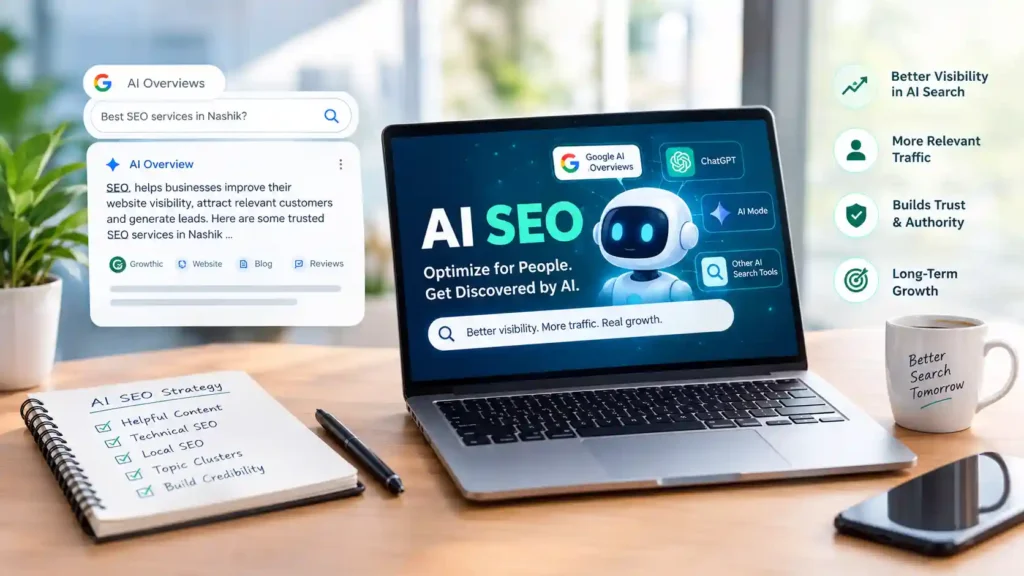
Search engines are also introducing AI-powered search experiences. To make your content easier to understand, use clear headings, direct explanations, descriptive links and reliable information.
There is no guaranteed way to appear in AI-generated answers. Focus on publishing genuinely helpful content rather than trying to manipulate search results.
6. Practical SEO Examples
Understanding SEO becomes easier when you consider how it applies to different websites.
Example 1: Local business
A salon wants to attract customers in Nashik. It creates a useful website with service information, accurate contact details and relevant location pages. It also maintains its Google Business Profile and encourages genuine customer reviews. These activities can improve its visibility for relevant local searches.
Example 2: Blog website
A new blog publishes informative articles around a clearly defined topic. The owner researches relevant keywords, organizes articles into related categories, improves internal links and monitors indexing through Google Search Console. Over time, some articles may begin attracting organic traffic.
Example 3: E-commerce website
An online store improves its product descriptions, category pages, navigation and technical performance. It also publishes useful buying guides to answer customer questions. These improvements can help search engines understand its products and make the website easier for shoppers to use.
These are illustrative examples, not guaranteed outcomes. Actual results depend on competition, website quality and many other factors.
7. A Step-by-Step SEO Strategy for Beginners
If you are starting SEO for your website, follow a structured approach.
- Research keywords: Identify relevant search terms and understand what users expect from the results.
- Create useful content: Publish original pages that answer real questions and explain your products or services clearly.
- Optimize website pages: Improve titles, headings, URLs, images and internal links.
- Fix technical issues: Check website speed, mobile usability, indexing and broken links.
- Build relevant authority: Earn quality backlinks through useful content and legitimate outreach.
- Improve local visibility: If your business serves a specific area, maintain your Google Business Profile and relevant location information.
- Monitor performance: Use Google Search Console and Google Analytics 4 to track organic performance and meaningful conversions.
- Update regularly: Improve existing pages based on user needs, performance data and changes in your offerings.
SEO is an ongoing process. Regular reviews help you identify problems and opportunities as your website grows.
8. Essential SEO Tools
The right tools can simplify SEO research, monitoring and website optimization.
| Tool | Main purpose |
|---|---|
| Google Search Console | Monitor search performance, indexing and technical issues |
| Google Analytics 4 | Understand website traffic and user interactions |
| Google Keyword Planner | Discover keyword ideas and estimated search demand |
| Semrush | Research keywords, competitors and backlinks |
| Ahrefs | Analyze backlinks and keyword opportunities |
| Screaming Frog | Audit website structure and technical SEO |
| Google PageSpeed Insights | Evaluate page performance and Core Web Vitals |
You don’t need every paid SEO tool to get started. Google Search Console and Google Analytics 4 provide useful information for many basic SEO tasks.
Frequently Asked Questions
1. What is SEO in simple words?
SEO is the process of improving a website so that it can appear more prominently in relevant organic search results. It involves optimizing content, website structure, technical performance and other factors to help search engines understand your pages and connect them with relevant searches.
2. How does SEO work step by step?
SEO involves helping search engines discover your pages, making useful content accessible for indexing and improving its relevance to users’ searches. The main processes are crawling, indexing and ranking. Website owners support these processes through content optimization, technical SEO and other improvements.
3. How long does SEO take to show results?
SEO timelines vary depending on competition, website condition, content quality and the work involved. Some changes may produce visible improvements within a few months, while substantial organic growth can take longer. Consistent optimization and regular performance monitoring are important.
4. Is SEO free?
Organic search clicks do not require payment to Google. However, SEO may involve costs for content creation, technical development, tools and professional services. Businesses can begin with basic SEO tasks themselves, depending on their knowledge and available time.
5. Is SEO still relevant in 2026?
Yes. People continue to use search engines to discover information, products and services. SEO helps websites improve their visibility in relevant searches, including evolving search experiences. Its practices may change, but providing useful content and a technically accessible website remains important.
6. Can small businesses do SEO without an agency?
Yes. Small businesses can start with keyword research, helpful content, basic on-page optimization, Google Business Profile management and Google Search Console. More complex websites or technical problems may require professional assistance.
Conclusion
SEO is a long-term process that helps websites become more accessible, relevant and visible in organic search results. It combines content creation, keyword research, technical improvements, link building and a good user experience.
For beginners and small businesses, the best starting point is to understand the audience, publish useful content and ensure that important website pages can be discovered and indexed.
As search technology continues to evolve in 2026, a consistent, user-focused SEO strategy can help businesses build online visibility, attract relevant visitors and support sustainable growth.