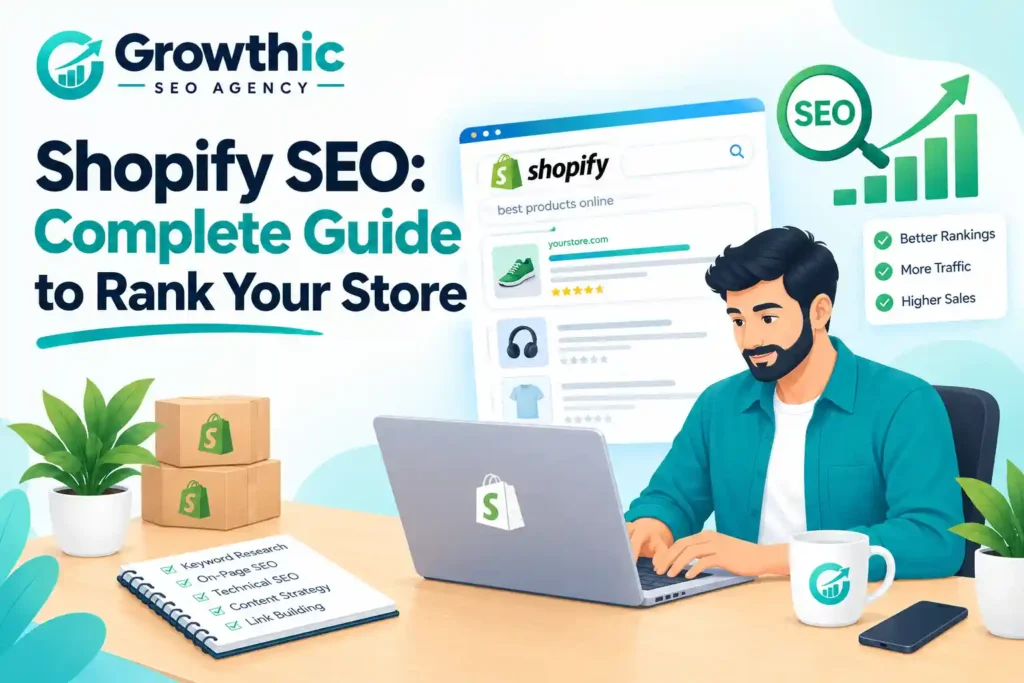
Running a Shopify store is only the first step toward building a successful ecommerce business. To attract customers without relying entirely on paid advertising, your products need to be discoverable through search engines.
Shopify SEO helps improve your store’s visibility in organic search results by making your website easier to understand, navigate, and use. This guide covers the essential steps to optimize your Shopify store and attract shoppers who are actively looking for your products.
What Is Shopify SEO?
Shopify SEO is the process of improving an online store so search engines can discover, understand, and rank its pages for relevant searches.
It includes keyword research, product and collection optimization, technical improvements, image optimization, internal linking, and helpful content creation.
Although Shopify provides useful built-in SEO features, store owners still need to create valuable content and maintain a well-organized website. The goal is to attract relevant visitors and turn them into customers.
1. Start With the Shopify SEO Basics
Before making advanced changes, establish a strong foundation for your store.
- Connect your website to Google Search Console.
- Submit your Shopify XML sitemap.
- Use a custom domain and HTTPS.
- Organize products into relevant collections.
- Create clear navigation menus.
- Check mobile usability and loading performance.
- Fix broken links and unnecessary redirects.
Shopify automatically generates an XML sitemap and handles several technical SEO elements. However, you should still check that important pages are accessible, internally linked, and eligible for indexing.
2. Research Keywords Based on Search Intent
Keyword research helps you understand what potential customers search for before purchasing a product.
Instead of targeting every popular keyword, choose phrases that accurately describe your products and match the customer’s needs.
For example, a handbag store could target:
- Product keywords: Brown leather handbag, women’s office bag.
- Collection keywords: Leather handbags for women, everyday handbags.
- Informational keywords: How to choose a leather handbag.
- Comparison keywords: Tote bag vs. shoulder bag.
Product and collection pages generally target shopping-related searches, while blog articles answer questions and help customers research their options.
Use keyword research tools, search suggestions, and customer questions to identify opportunities. Add relevant terms naturally without repeating the same phrase throughout every page.
3. Optimize Shopify Product Pages
Product pages are important because they help shoppers understand what you sell and decide whether to buy.
Follow these practices:
- Write clear, descriptive product titles.
- Create unique descriptions explaining features and benefits.
- Include useful details such as materials, dimensions, and care instructions.
- Write relevant SEO titles and meta descriptions.
- Add high-quality product images with descriptive alt text.
- Link to related collections and complementary products.
- Display genuine customer reviews where appropriate.
Avoid copying manufacturer descriptions word for word. Original, helpful information can make your product pages more valuable to customers.
For example, a title such as “Women’s Brown Leather Office Bag” is more descriptive than a vague name like “Classic Model 2026.”
4. Improve Collection Pages
Collection pages help shoppers explore groups of related products. They can also target broader commercial searches than individual product pages.
For example, a collection called “Women’s Running Shoes” can serve customers who want to compare different products before choosing a specific pair.
To improve these pages:
- Use clear collection names.
- Write a helpful introduction.
- Add relevant SEO titles and meta descriptions.
- Organize products logically.
- Link to useful subcategories.
- Answer common buying questions where appropriate.
Avoid adding lengthy, generic paragraphs simply to increase word count. Every section should help customers understand the products or make a better purchasing decision.
5. Improve Technical SEO and Website Structure
Technical SEO helps search engines discover and understand your website while providing a better shopping experience.
Organize your store logically, with the homepage linking to important collections, collections linking to products, and relevant blog articles directing readers to suitable products.
Also review:
- Mobile usability and page speed
- Broken links and 404 errors
- Redirects and canonical URLs
- Duplicate or low-value pages
- Unnecessary apps and scripts
- Pages that are difficult to discover through internal links
Shopify manages several technical elements automatically, but themes, apps, and custom code can introduce problems. Review important pages regularly and investigate unexpected indexing or performance issues.
Keep URLs short and descriptive. If an established URL needs to change, use an appropriate redirect to preserve the connection between the old and new pages.
6. Write Better SEO Titles and Meta Descriptions
Your SEO title should clearly describe the page and include the main keyword when it fits naturally. The meta description should summarize what shoppers will find and explain why the page may be useful.
Example
SEO title: Women’s Leather Office Bags | Premium Work Bags
Meta description: Explore stylish women’s leather office bags with practical storage, quality materials, and designs suited to work and everyday use.
Avoid listing several keyword variations in the same title. Google may generate a different search snippet depending on the query, so write accurate metadata without expecting your wording to appear exactly as submitted.
7. Optimize Product Images
Images help customers evaluate products, but oversized files can affect loading performance.
Use clear product photography, appropriate image dimensions, and descriptive filenames. Write meaningful alt text that explains what the image shows.
For example, “Black leather office bag with laptop compartment” is more useful than a long list of repeated keywords.
Include different product angles or lifestyle images when they help shoppers understand the product. Balance image quality with page performance, particularly for mobile visitors.
8. Create Useful Blog Content
Your store’s blog can attract people who are researching products before making a purchase.
For example, a skincare store could publish guides about building a skincare routine or comparing common ingredients. A footwear store could explain how to choose running shoes.
Create content that answers genuine customer questions, provides original value, and links naturally to relevant collections or products.
A useful content journey looks like this:
Informational article → Relevant collection → Product page → Purchase
Avoid publishing large numbers of thin, repetitive articles just to target more keywords. Quality and relevance should guide your content strategy.
9. Strengthen Internal Links and Website Authority
Internal links help visitors discover related products and help search engines understand how your pages connect.
Link relevant blog posts to collections, collections to products, and related products to one another where useful.
You can also build website authority by earning relevant links from reputable websites through useful resources, partnerships, digital PR, and industry publications.
Avoid buying spammy backlinks or creating large numbers of low-quality links. Focus on relevance, credibility, and genuine value.
Shopify SEO Checklist
Before publishing or updating important pages, check that you have:
- Researched relevant keywords and search intent.
- Written unique product descriptions.
- Optimized collection pages and metadata.
- Added descriptive image alt text.
- Improved mobile usability and page speed.
- Checked indexing and broken links.
- Added relevant internal links.
- Created useful blog content.
- Reviewed website performance in Google Search Console.
Frequently Asked Questions
How long does Shopify SEO take to show results?
Results vary depending on competition, website quality, content, and existing authority. SEO improvements generally take time and cannot guarantee specific rankings.
Does Shopify automatically handle SEO?
Shopify provides features such as an XML sitemap and canonical tags, but you still need to optimize content, product pages, website structure, and performance.
Are product pages or collection pages more important?
Both serve different purposes. Product pages target specific items, while collection pages help shoppers discover broader product categories.
Can a Shopify store rank without a blog?
Yes. A blog is optional, but useful articles can attract informational traffic and help customers discover relevant products.
Conclusion
A successful Shopify SEO strategy combines helpful product descriptions, well-organized collections, technical improvements, optimized images, relevant internal links, and valuable content.
Start with the pages most important to your business, improve them based on customer needs, and monitor their performance over time. Consistent improvements can help your store attract relevant organic traffic and create a better shopping experience.