
Best Off-Page SEO Activities to Increase Website Authority and Traffic
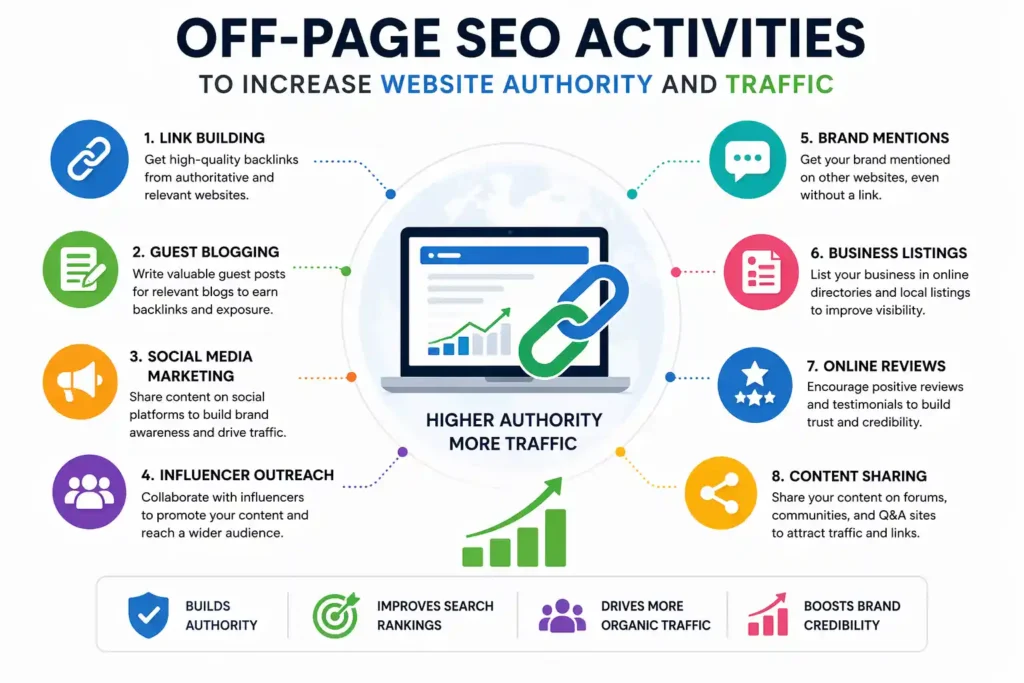
Off-page SEO has become one of the most important factors for improving website authority, increasing organic traffic, and achieving higher rankings in search engine results. Many businesses focus heavily on content optimization and technical improvements but overlook the importance of external signals that search engines use to measure trust and credibility. Understanding what is off-page SEO is essential because search engines evaluate not only the quality of your website but also how other websites and users interact with your brand online. Off-page SEO includes strategies such as link building, social media marketing, brand mentions, influencer outreach, online reputation management, and directory submissions. These activities help search engines determine whether a website is trustworthy, authoritative, and valuable enough to rank higher in competitive search results.
What Is Off-Page SEO?
Off-page SEO refers to all optimization activities performed outside of a website to improve its authority, trustworthiness, and search engine rankings. Unlike on-page SEO, which focuses on optimizing website content and internal elements, off-page SEO works externally to strengthen a website’s reputation across the internet. When discussing what is off-page SEO, the primary goal is to build signals that show search engines your website is valuable and respected by other websites and online communities. One of the most important components of off-page SEO is backlink building because search engines treat quality backlinks as recommendations from other websites. However, modern off-page SEO extends beyond backlinks and also includes social media engagement, influencer marketing, online reviews, brand mentions, guest posting, and digital PR campaigns.
How Off-Page SEO Improves Website Authority
Off-page SEO plays a major role in helping search engines determine whether a website is trustworthy, authoritative, and valuable for users. When comparing websites that target similar keywords, search engines often analyze external signals to decide which pages deserve higher rankings. One of the strongest off-page SEO factors is the quality of backlinks pointing to a website. Backlinks from authoritative and relevant websites act as trust signals that tell search engines your content is credible and useful. However, not all backlinks provide the same value. A single backlink from a respected industry website can be more powerful than dozens of low-quality links from unrelated or spammy sources. This is why successful off-page SEO techniques focus on earning high-quality backlinks naturally through valuable content, outreach campaigns, and relationship-building strategies rather than relying on mass link-building tactics.
Best Off-Page SEO Activities to Increase Website Authority and Traffic
One of the most effective off-page SEO activities for increasing website authority is strategic link building. Link building involves acquiring backlinks from relevant and trustworthy websites that strengthen your domain authority and improve search visibility. Guest posting remains one of the most popular off-page SEO techniques because it allows businesses to publish valuable content on industry-related websites while earning quality backlinks. Broken link building is another powerful strategy where businesses identify broken external links on websites and suggest their own relevant content as replacements. Digital PR campaigns and outreach strategies also help businesses earn editorial backlinks from news websites, blogs, and authoritative publications. High-quality backlinks not only improve rankings but also drive referral traffic from audiences already interested in related topics or services.
Most Effective Off-Page SEO Techniques in 2026
As search engine algorithms continue evolving, businesses must focus on advanced off-page SEO techniques that build genuine authority and long-term trust rather than relying on outdated link-building shortcuts. One of the most effective strategies in 2026 is authority link building through high-quality content partnerships and digital PR campaigns. Search engines now place greater importance on contextual relevance and editorial trust, which means backlinks from respected industry websites carry significantly more value than random directory links or low-quality blog networks. Businesses can earn powerful backlinks by publishing original research, case studies, data-driven reports, and expert insights that other websites naturally reference. HARO-style outreach campaigns also remain highly effective because they connect businesses with journalists and publishers looking for expert opinions, creating opportunities for strong editorial backlinks from trusted media platforms.
Off-Page SEO Checklist for Better Rankings
Following a structured off-page SEO checklist helps businesses maintain consistent optimization efforts and avoid missing important authority-building opportunities. One of the first steps in any off-page SEO strategy is conducting competitor backlink analysis to understand where competitors earn their strongest backlinks. This helps identify link-building opportunities from industry blogs, directories, publications, and partnerships. Businesses should also regularly monitor backlink quality to ensure their link profiles remain healthy and free from toxic or spammy backlinks that could negatively affect rankings. Consistent outreach campaigns for guest posting, digital PR, and influencer collaborations should be part of every monthly SEO strategy. Maintaining active social media promotion also helps increase content visibility and attract organic backlinks from users who discover and share valuable resources.
Types of Off-Page SEO
Understanding the different off-page SEO types helps businesses create more balanced optimization strategies that improve both authority and search visibility. One of the most common types is link-based off-page SEO, which focuses on earning backlinks from external websites. Search engines use backlinks as signals of trust and authority because they indicate that other websites consider your content valuable enough to reference. Guest posting, editorial backlinks, niche outreach, and broken link building are all examples of link-based off-page SEO techniques. However, successful link-building strategies now focus more on relevance and quality than quantity. Backlinks from trusted industry websites carry greater ranking value than large numbers of low-quality links from unrelated sources. Businesses that build strong backlink profiles naturally tend to achieve better long-term ranking stability and stronger domain authority over time.
Important Off-Page SEO Factors
Several critical off-page SEO factors influence how search engines evaluate website authority and determine rankings. One of the most important factors is backlink quality because search engines prioritize links from trustworthy and relevant websites. A backlink from a highly respected industry publication often provides more value than dozens of low-quality links from unrelated websites. Relevance also plays a major role because backlinks from websites within the same industry or niche send stronger contextual trust signals. Anchor text diversity is another important ranking factor because natural backlink profiles contain varied anchor texts rather than repetitive keyword-heavy phrases. Over-optimized anchor text patterns may appear manipulative and could negatively impact rankings. Businesses should focus on earning natural backlinks through valuable content and genuine outreach strategies instead of using aggressive link schemes.
Common Off-Page SEO Mistakes to Avoid
Many businesses invest heavily in off-page SEO techniques but fail to achieve strong results because they use outdated or risky strategies that can harm search engine rankings. One of the most common mistakes is buying low-quality backlinks from spammy websites or private blog networks. While these tactics may create temporary ranking improvements, modern search engine algorithms are highly effective at detecting unnatural link-building patterns. Websites associated with manipulative backlinks can experience ranking penalties that significantly reduce organic visibility. Another major mistake is over-optimizing anchor text by repeatedly using exact-match keywords in backlinks. Natural backlink profiles contain a mix of branded, generic, and contextual anchor texts. Excessive keyword-focused anchors may appear unnatural and trigger algorithmic penalties that damage long-term SEO performance.
Off-Page SEO for Local Businesses
Local businesses can benefit greatly from strong off-page SEO strategies because search engines use external trust signals to determine which businesses deserve visibility in local search results. One of the most important off-page SEO activities for local businesses is optimizing business listings and local citations across trusted directories. Consistent business information such as company name, address, and phone number helps search engines verify legitimacy and improve local search relevance. Customer reviews also play a major role in local SEO because positive feedback builds trust and influences search engine credibility signals. Businesses with strong review profiles often perform better in local search rankings and attract more customer engagement. Local backlinks from regional blogs, news websites, and community organizations also strengthen geographic relevance and authority for local search visibility.
Best Tools for Off-Page SEO
Using the right tools is essential for managing successful off-page SEO activities because they help businesses analyze backlinks, monitor authority growth, track competitors, and identify new link-building opportunities. One of the most widely used platforms for backlink analysis is Ahrefs because it provides detailed insights into backlink profiles, referring domains, anchor text distribution, and competitor link strategies. Businesses can use these insights to discover high-authority websites linking to competitors and identify outreach opportunities for their own campaigns. Another valuable tool is SEMrush, which offers backlink audits, toxic link analysis, and competitor authority tracking. Monitoring backlink quality regularly is important because harmful backlinks can negatively affect search engine rankings if left unmanaged over time. These tools also help businesses measure domain authority growth and evaluate the effectiveness of different off-page SEO techniques.
Future Trends in Off-Page SEO
The future of off-page SEO is evolving rapidly as search engines continue improving their ability to measure trust, authority, and content relevance across the web. One major trend shaping the future of off-page SEO techniques is the growing importance of entity-based SEO and brand authority signals. Search engines increasingly evaluate how often brands are mentioned across trusted websites, online communities, podcasts, news platforms, and social media channels. Even unlinked brand mentions may contribute to authority signals because search engines can recognize relationships between entities and industries more accurately than before. Businesses that focus on building strong brand reputations and industry recognition are likely to gain long-term advantages in search rankings. This shift means future off-page SEO strategies will rely less on backlink quantity and more on genuine authority and trust-building activities.
FAQs About Off-Page SEO
What is off-page SEO?
Off-page SEO refers to optimization activities performed outside your website to improve search engine rankings. It includes link building, social media marketing, brand mentions, directory submissions, and other strategies that increase website authority and trust.
Why is off-page SEO important?
Off-page SEO helps search engines evaluate your website’s credibility, authority, and popularity. Strong backlinks and brand signals improve rankings, increase organic traffic, and strengthen trust among users and search engines.
What are the best off-page SEO techniques?
Effective off-page SEO techniques include guest posting, authority link building, social media promotion, influencer outreach, digital PR campaigns, business directory submissions, and content marketing strategies that earn natural backlinks.
How long does off-page SEO take to show results?
Off-page SEO results usually take several weeks or months depending on competition, backlink quality, and industry authority. Consistent link-building and brand-building strategies often produce stronger long-term ranking improvements.
What are backlinks in off-page SEO?
Backlinks are links from other websites pointing to your site. Search engines view quality backlinks as trust signals that indicate your content is valuable, authoritative, and relevant for users.
Is social media part of off-page SEO?
Yes, social media supports off-page SEO by increasing content visibility, generating referral traffic, and improving brand awareness. Strong social engagement can indirectly support search engine visibility and authority growth.
What is the difference between on-page and off-page SEO?
On-page SEO focuses on optimizing content and website elements within your site, while off-page SEO focuses on external strategies like backlinks, brand mentions, and online reputation building.
Can off-page SEO improve local SEO rankings?
Yes, off-page SEO improves local SEO through local citations, business listings, customer reviews, and local backlinks that strengthen geographic relevance and business authority in search results.
What are toxic backlinks?
Toxic backlinks are low-quality or spammy links that can harm search engine rankings. Websites should regularly monitor backlink profiles and disavow harmful links when necessary.
Which tools help with off-page SEO?
Popular off-page SEO tools include Ahrefs, SEMrush, Moz, BuzzSumo, and Google Search Console for backlink analysis and authority monitoring.
Conclusion
Off-page SEO remains one of the most powerful strategies for improving website authority, increasing organic traffic, and strengthening search engine rankings in competitive industries. Understanding what is off-page SEO and implementing effective off-page SEO techniques allows businesses to build trust signals that search engines use to evaluate credibility and relevance. High-quality backlinks, brand mentions, influencer collaborations, social media engagement, and digital PR campaigns all contribute to stronger authority and improved visibility. Businesses that follow a structured off-page SEO checklist and consistently perform valuable SEO off-page activities often achieve better long-term ranking stability and stronger domain authority compared to competitors relying only on on-page optimization strategies.