
Technical SEO vs On-Page SEO: Which One Improves Rankings Faster?
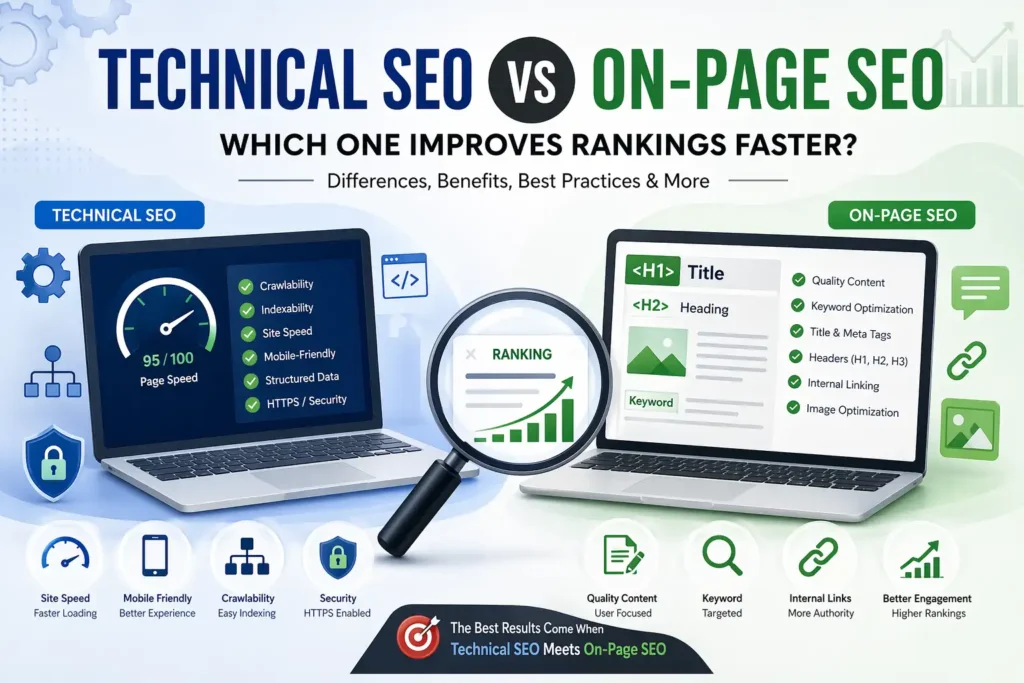
Search engine optimization has become one of the most important digital marketing strategies for businesses that want to grow online visibility, increase organic traffic, and generate qualified leads. In 2026, ranking on the first page of search engines like Google is more competitive than ever because search algorithms now prioritize user experience, content relevance, website speed, and technical performance together. Many website owners often compare technical SEO vs on-page SEO to understand which strategy can deliver faster ranking improvements. While both are essential parts of a successful SEO strategy, they serve different purposes and affect rankings in unique ways. Understanding the difference between on-page SEO vs technical SEO helps businesses prioritize optimization efforts and avoid wasting time on ineffective tactics that do not produce measurable ranking improvements.
What Is Technical SEO?
Technical SEO refers to the process of optimizing a website’s infrastructure so search engines can efficiently crawl, index, and rank its pages. Unlike content-focused optimization strategies, technical SEO works behind the scenes to ensure websites function correctly for both users and search engine bots. When comparing technical SEO vs on-page SEO, technical SEO focuses more on backend improvements such as site speed, mobile usability, structured data, website architecture, security protocols, XML sitemaps, and crawl optimization. Without strong technical SEO, even high-quality content may struggle to rank because search engines cannot properly access or understand website pages. This is why technical optimization forms the foundation of every successful SEO strategy and directly impacts how well a website performs in search engine results pages.
Core Elements of Technical SEO
Technical SEO includes multiple optimization factors that help search engines access, interpret, and rank website pages efficiently. One of the most important technical SEO elements is website speed optimization because page loading time directly affects user experience and search rankings. Search engines prioritize websites that load quickly on both desktop and mobile devices since users expect fast browsing experiences. Another critical factor is mobile-friendliness, especially after mobile-first indexing became a standard ranking consideration. Websites that are difficult to use on smartphones often experience lower rankings and higher bounce rates. XML sitemaps also play a major role in technical SEO because they help search engines discover important pages more effectively. Proper robots.txt configuration ensures search engine bots can crawl valuable content while blocking unnecessary pages that waste crawl budget.
Why Technical SEO Matters for Rankings
Technical SEO plays a critical role in determining whether a website can achieve strong organic rankings because search engines rely on technical signals to crawl and evaluate pages efficiently. When comparing technical SEO vs on-page SEO, technical SEO acts as the foundation that supports all other optimization efforts. Even the best-written content may fail to rank if search engines cannot properly crawl, index, or render a webpage. For example, websites with broken internal links, slow loading speeds, or indexing errors often struggle to appear in search results despite publishing high-quality articles. Technical SEO ensures search engines can navigate websites smoothly and understand their structure, which increases the chances of pages being indexed and ranked correctly.
What Is On-Page SEO?
On-page SEO refers to the process of optimizing individual webpages to improve their visibility, relevance, and rankings in search engine results. Unlike technical SEO, which focuses on website infrastructure, on-page SEO concentrates on content optimization and page-level elements that help search engines understand what a webpage is about. In the discussion of on-page SEO vs technical SEO, on-page SEO is often considered the most visible aspect because it directly affects the content users interact with. This includes optimizing title tags, meta descriptions, headings, keywords, internal links, images, and overall content quality. The primary goal of on-page SEO is to ensure webpages satisfy user search intent while sending strong relevance signals to search engines for targeted keywords.
Core Elements of On-Page SEO
Several important factors influence successful on-page SEO performance, and each element plays a role in helping search engines understand page relevance. One of the most important components is keyword optimization because search engines use keywords to determine what a page should rank for. In the debate between technical SEO vs on-page SEO, on-page optimization often produces noticeable ranking improvements when content better aligns with user intent. Keywords should appear naturally in titles, headings, introductions, URLs, and throughout the content without excessive repetition. Title tags and meta descriptions are equally important because they influence click-through rates from search engine results pages. A compelling title with the target keyword can increase visibility and attract more users to click on the page.
Technical SEO vs On-Page SEO: Key Differences
Understanding the differences between technical SEO vs on-page SEO is essential for building an effective search engine optimization strategy. Although both approaches aim to improve website rankings and organic visibility, they focus on different areas of optimization. Technical SEO primarily deals with backend website infrastructure and ensures search engines can crawl, index, and access pages efficiently. On-page SEO, however, focuses on optimizing visible page elements such as content, keywords, headings, and internal links to improve relevance for search queries. In simple terms, technical SEO helps search engines access your website correctly, while on-page SEO helps search engines understand the meaning and quality of your content. Businesses that fail to balance both strategies often struggle to achieve long-term ranking stability because strong content alone cannot overcome severe technical problems, and perfect technical infrastructure cannot compensate for weak or irrelevant content.
Technical SEO vs On-Page SEO Comparison Table
| Factor | Technical SEO | On-Page SEO |
| Primary Focus | Website infrastructure and performance | Content optimization and relevance |
| Goal | Improve crawling and indexing | Improve keyword relevance and engagement |
| Main Audience | Search engine crawlers | Users and search engines |
| Key Elements | Site speed, mobile optimization, structured data, crawlability | Keywords, headings, meta tags, content quality |
| Optimization Area | Backend website structure | Frontend webpage content |
| Difficulty Level | Advanced | Moderate |
| Impact on UX | Indirect but critical | Direct and visible |
| Ranking Speed | Fast if technical issues exist | Often faster for content improvements |
| Tools Used | Google Search Console, Screaming Frog, GTmetrix | Yoast SEO, Surfer SEO, Rank Math |
| Long-Term Importance | Essential for website health | Essential for relevance and engagement |
Technical SEO vs On-Page SEO: Which Improves Rankings Faster?
The answer to whether technical SEO vs on-page SEO improves rankings faster depends largely on the current condition of the website. If a website suffers from serious technical problems such as crawl errors, slow loading speed, broken internal links, poor mobile usability, or indexing issues, technical SEO can produce dramatic improvements relatively quickly. For example, fixing pages blocked from indexing or improving website speed can help search engines crawl and rank content more efficiently within a short period. Technical improvements often create strong ranking boosts because they remove barriers preventing search engines from properly accessing the site. In these situations, technical SEO acts as a recovery mechanism that restores website performance and improves overall search visibility.
When On-Page SEO Improves Rankings Faster
In many situations, on-page SEO delivers faster ranking improvements because it directly affects how relevant a webpage appears for specific search queries. When comparing technical SEO vs on-page SEO, content optimization often creates quicker visible results for websites that already have a healthy technical foundation. Search engines prioritize pages that match user intent closely, so improving keyword targeting, updating outdated content, and optimizing headings can significantly boost rankings within weeks. For example, if a blog post targets the wrong search intent or lacks semantic keywords, improving the content structure and adding relevant information can rapidly increase search visibility. Updating title tags and meta descriptions can also improve click-through rates, which indirectly strengthens rankings by signaling user engagement to search engines.
When Technical SEO Improves Rankings Faster
Technical SEO can improve rankings faster when a website suffers from serious infrastructure or crawlability problems that prevent search engines from properly accessing content. In the discussion of on-page SEO vs technical SEO, technical optimization often creates immediate impact when websites experience indexing errors, slow performance, broken pages, or mobile usability issues. For example, if important pages are accidentally blocked by robots.txt files or noindex tags, fixing those issues can quickly restore visibility in search results. Similarly, improving website speed can reduce bounce rates and improve user experience signals that affect rankings. Search engines increasingly prioritize fast-loading and mobile-friendly websites because these factors directly influence visitor satisfaction and usability across devices.
How Technical SEO and On-Page SEO Work Together
Although many businesses compare technical SEO vs on-page SEO as separate strategies, the reality is that both work together to create a strong and sustainable SEO foundation. Technical SEO ensures search engines can properly crawl, access, render, and index website pages, while on-page SEO helps search engines understand the relevance and value of the content on those pages. Without technical SEO, even highly optimized content may remain invisible in search results because search engine crawlers cannot efficiently access it. On the other hand, a technically perfect website with weak or poorly optimized content will still struggle to rank because search engines prioritize useful and relevant information for users. Successful SEO strategies combine both approaches to maximize visibility, user experience, and ranking potential across competitive search queries.
Best Practices for Technical SEO in 2026
Technical SEO continues to evolve as search engines prioritize user experience, performance optimization, and advanced crawling capabilities. One of the most important technical SEO best practices in 2026 is improving Core Web Vitals because these metrics directly measure user experience factors such as loading speed, interactivity, and visual stability. Websites that load slowly or shift content unexpectedly often experience lower rankings and higher bounce rates. Mobile-first optimization is equally critical because most users now access websites through smartphones and tablets. Businesses should ensure responsive design, fast mobile loading speeds, and easy navigation across all screen sizes. Another important practice is maintaining clean website architecture with organized navigation structures that help search engines crawl pages efficiently and distribute authority effectively across the site.
Best Practices for On-Page SEO in 2026
On-page SEO continues to play a major role in improving search visibility because search engines rely heavily on content relevance and user engagement signals to determine rankings. One of the most important on-page SEO best practices in 2026 is creating content that fully satisfies user search intent. Search engines now prioritize helpful, experience-driven content that answers user questions clearly and comprehensively. Businesses should focus on producing in-depth articles that solve real problems instead of publishing thin content created only for keyword rankings. In the comparison of technical SEO vs on-page SEO, strong content optimization often creates faster engagement improvements because users interact directly with page content. Using semantic keywords naturally throughout headings, introductions, and body text helps search engines understand topic relevance without excessive keyword repetition that could harm readability and rankings.
Technical SEO Checklist vs On-Page SEO Checklist
When building a successful SEO strategy, businesses should use separate checklists for technical SEO and on-page SEO to ensure all important optimization factors are covered. A technical SEO checklist focuses on improving website infrastructure and crawl efficiency. Important technical tasks include checking website speed, optimizing Core Web Vitals, ensuring mobile responsiveness, fixing broken links, validating XML sitemaps, and resolving crawl or indexing errors. Businesses should also verify HTTPS implementation, improve URL structures, and remove duplicate content issues using canonical tags. Monitoring crawl reports through Google Search Console helps identify technical problems that may limit search visibility. Technical SEO audits should be performed regularly because even small infrastructure issues can negatively affect rankings and user experience over time.
Tools for Technical SEO and On-Page SEO
Using the right SEO tools is essential for improving website performance, identifying optimization opportunities, and monitoring search visibility growth. In the discussion of technical SEO vs on-page SEO, different tools serve different purposes depending on whether businesses need to improve technical infrastructure or optimize content relevance. Technical SEO tools help analyze crawlability, indexing issues, page speed, structured data, and website architecture. One of the most widely used platforms is Google Search Console because it provides direct insights into indexing errors, mobile usability issues, crawl reports, and search performance data. Tools like Screaming Frog help businesses audit websites by identifying broken links, duplicate content, redirect chains, and missing metadata. GTmetrix and PageSpeed Insights are valuable for analyzing website speed and Core Web Vitals performance, which directly affect user experience and search rankings.
Common Myths About Technical SEO vs On-Page SEO
There are many misconceptions surrounding technical SEO vs on-page SEO, and these myths often cause businesses to invest in incomplete optimization strategies that limit ranking potential. One common myth is that technical SEO is only important for developers or large websites. In reality, every website benefits from technical optimization because crawlability, mobile usability, and page speed directly affect search visibility regardless of website size. Small business websites with poor technical structures can struggle to rank even if they publish strong content regularly. Another widespread misconception is that content alone can guarantee high rankings. While high-quality content is essential, search engines still require technically accessible websites to crawl and index pages properly. Without technical SEO, valuable content may never achieve its full ranking potential.
Technical SEO vs On-Page SEO for Different Types of Websites
The importance of technical SEO vs on-page SEO can vary depending on the type of website and its business goals. For eCommerce websites, technical SEO often becomes extremely important because these websites usually contain thousands of product pages that require efficient crawling and indexing. Poor site architecture, duplicate product pages, slow loading times, and crawl budget issues can significantly reduce visibility in search results. Technical optimization helps eCommerce platforms improve navigation structures, page speed, mobile usability, and structured data implementation for product listings. At the same time, on-page SEO remains critical because optimized product descriptions, category pages, metadata, and internal linking help improve keyword relevance and conversions. Successful eCommerce SEO strategies combine strong technical foundations with highly optimized content to maximize search visibility and sales performance.
Future Trends in Technical SEO and On-Page SEO
The future of SEO continues to evolve rapidly as search engines become more advanced in understanding user behavior, content relevance, and website performance. One of the biggest future trends in technical SEO vs on-page SEO is the growing role of artificial intelligence in search algorithms. Search engines increasingly use AI systems to understand context, search intent, and content quality more accurately. This means businesses must focus on creating genuinely helpful content rather than relying only on traditional keyword optimization tactics. On-page SEO strategies will continue shifting toward topical authority, semantic relevance, and user-focused experiences. Search engines are becoming better at identifying content that demonstrates expertise, trustworthiness, and originality, making high-quality content creation more important than ever for long-term ranking success.
FAQs About Technical SEO vs On-Page SEO
What is the difference between technical SEO and on-page SEO?
Technical SEO focuses on improving website infrastructure so search engines can crawl and index pages efficiently. On-page SEO focuses on optimizing content, keywords, headings, and user experience signals to improve relevance and rankings in search engine results.
Which is more important: technical SEO or on-page SEO?
Both are important because they work together. Technical SEO ensures your website is accessible and fast, while on-page SEO helps search engines understand your content. Ignoring either one can negatively affect rankings and organic traffic growth.
Does technical SEO improve rankings faster?
Technical SEO can improve rankings quickly when major issues like slow speed, crawl errors, or indexing problems exist. However, for already healthy websites, on-page SEO improvements often produce faster ranking gains through better content optimization.
Can on-page SEO work without technical SEO?
On-page SEO may help rankings temporarily, but without strong technical SEO, search engines may struggle to crawl, index, and understand your pages properly. A balanced strategy is essential for long-term SEO success and stable rankings.
Is technical SEO difficult for beginners?
Technical SEO can feel complex because it involves website structure, indexing, and performance optimization. However, beginners can start with simple tasks like improving page speed, fixing broken links, and optimizing mobile responsiveness.
How often should technical SEO audits be done?
Most websites should perform technical SEO audits every three to six months. Large websites or eCommerce stores may require more frequent audits to detect crawl errors, broken pages, duplicate content, and performance issues early.
What are the most important on-page SEO factors?
Important on-page SEO factors include high-quality content, keyword optimization, title tags, header tags, internal linking, image optimization, and matching content with user search intent to improve engagement and rankings.
Can technical SEO help local SEO rankings?
Yes, technical SEO improves local SEO by enhancing mobile usability, website speed, structured data implementation, and crawlability. These factors help search engines better understand and rank local business websites in search results.
What tools help with technical SEO and on-page SEO?
Popular technical SEO tools include Google Search Console, Screaming Frog, and GTmetrix. For on-page SEO, tools like Yoast SEO, Rank Math, and Surfer SEO help optimize content and keyword placement effectively.
Should small businesses invest in technical SEO?
Yes, small businesses should invest in technical SEO because even minor issues can hurt visibility and user experience. A technically optimized website loads faster, performs better on mobile devices, and supports stronger organic rankings.
Conclusion
The debate around technical SEO vs on-page SEO often leads businesses to believe they must prioritize one strategy over the other, but successful SEO depends on combining both approaches effectively. Technical SEO creates the foundation that allows search engines to crawl, index, and understand website pages efficiently, while on-page SEO ensures content remains relevant, engaging, and aligned with user intent. If a website suffers from severe technical issues, technical SEO can produce rapid ranking improvements by removing barriers that limit search visibility. However, for technically healthy websites, on-page SEO often delivers faster gains through content optimization, keyword targeting, and user engagement improvements. The speed of results ultimately depends on the current condition of the website and the competitiveness of the target keywords.